Activities


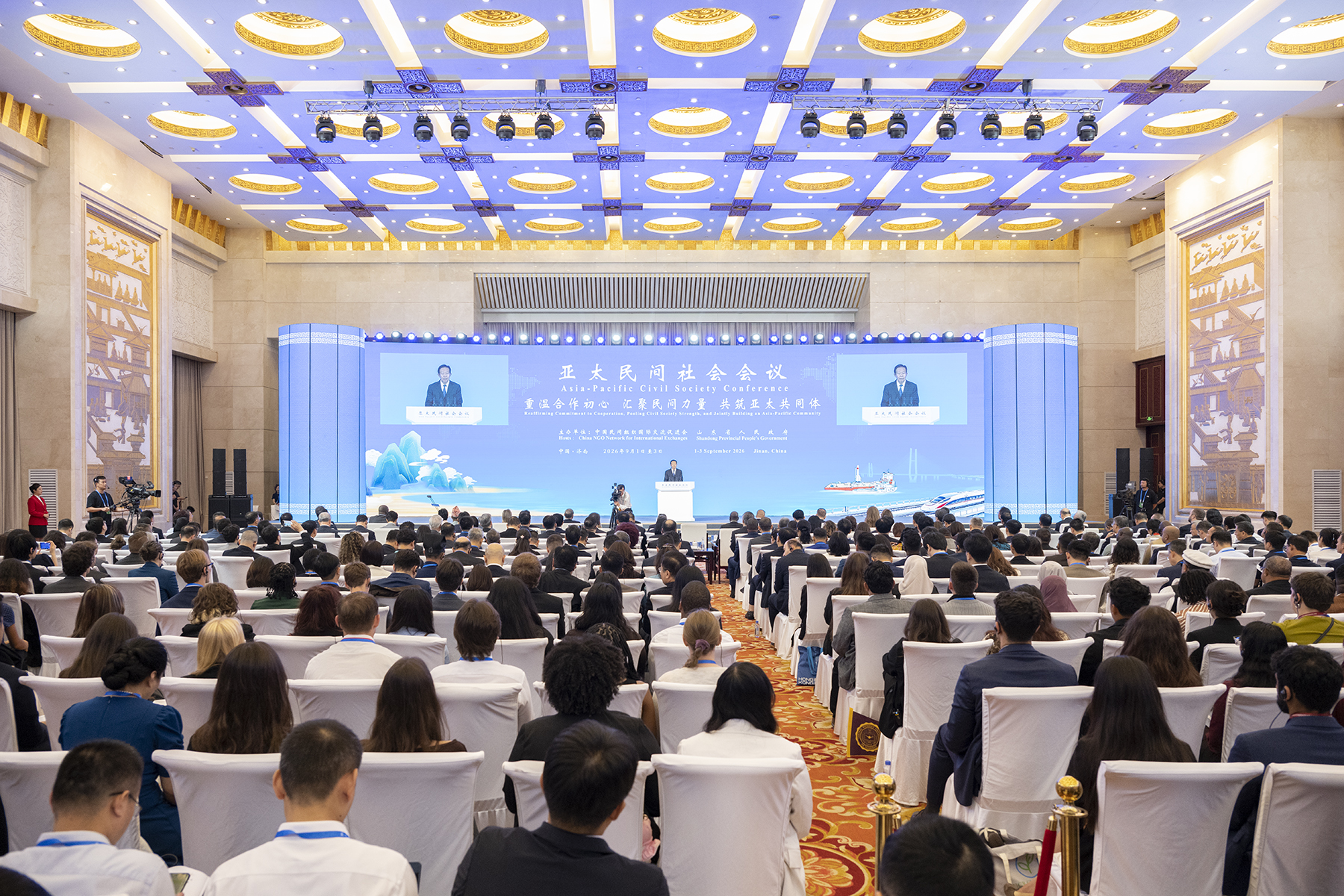
Jinan, September 2nd—The Asia-Pacific Civil Society Conference, themed “Reaffirming Commitment to Cooperation, Pooling Civil Society Strength, and Jointly Building an Asia-Pacific Community,” opened here today. The conference was co-hosted by the China NGO Network for International Exchanges (CNIE) and the Shandong Provincial People’s Government. Xiao Jie, Vice Chairman of the Standing Committee of the National People's Congress and President of the CNIE; Liu Haixing, Minister of the International Department of the CPC Central Committee (IDCPC); and Lin Wu, Secretary of the CPC Shandong Provincial Committee and Chairman of the Standing Committee of the Shandong Provincial People’s Congress, attended and addressed the conference. More than 300 participants were present, including Mongkol Surasajja, Vice President of the National Assembly and President of the Senate of Thailand; Paul Paolo, Deputy Speaker of the Parliament of Vanuatu; Esther Gil De Reboleno, Third Vice President of the Congress of Deputies of Spain; Chen Xu, Chair of the 2026 APEC Senior Officials' Meeting, and political heavyweights, experts, scholars and business representatives from 36 countries, heads of UN agencies, international organizations and non-governmental organizations; as well as representatives of relevant Chinese departments.

Xiao said that President Xi Jinping has pointed out that the Asia-Pacific is our home as well as the powerhouse of global economic growth. Over the past three decades and more, from envisioning a Free Trade Area of the Asia-Pacific to advancing the building of an Asia-Pacific community, the Asia-Pacific regional cooperation has flourished and taken deep root in the hearts of the people, creating the widely acclaimed “Asia-Pacific miracle.” Standing at a crossroads in history, we should strengthen the public support and work together to safeguard prosperity, stability, peace and tranquility in the Asia-Pacific; enhance people's well-being and jointly promote openness, connectivity, green development and innovation; contribute civil-society wisdom and jointly advance mutual understanding, inclusiveness and people-to-people bonds; and pool the strength of the people to uphold solidarity, mutual assistance and common progress in the Asia-Pacific. In March this year, China’s National People’s Congress reviewed and approved the outline of the 15th Five-Year Plan, setting out the major goals and key tasks for national development over the next five years. China will continue to pursue development with its doors wide open, advance high-standard opening up, and integrate its development with and contribute to the process of Asia-Pacific regional cooperation. China is ready to work with civil society across the Asia-Pacific to remain committed to the original aspiration for cooperation, jointly implement the four major global initiatives, and contribute civil-society wisdom and strength to carrying forward the “Asia-Pacific miracle” and promoting the building of a community with a shared future for humanity.

Liu said that President Xi Jinping has profoundly pointed out that we should stay true to APEC’s founding mission to promote economic growth and improve people’s lives, and champion open development where everyone shares opportunities and emerges a winner. We should promote a universally beneficial and inclusive economic globalization, and build an Asia-Pacific community. As profound changes unseen in a century accelerate across the world and factors of instability and uncertainty increase in the Asia-Pacific, it is all the more important for us to contribute to global economic stability and development with more dynamic and resilient Asia-Pacific cooperation. We should uphold openness to jointly safeguard the paradigm of connected development; unleash the drivers of innovation to jointly strengthen the region's growth advantages; and deepen practical cooperation to jointly foster the vision of universal benefit and inclusiveness. As the department in charge of the CPC's external work, the IDCPC will, as always, support the CNIE in building platforms for exchanges and cooperation, and work with friends from all sectors of civil society in the Asia-Pacific to enhance mutual trust through people-to-people and cultural exchanges, promote development through industrial cooperation, and build the future through people-to-people connectivity, contributing to an open, dynamic, resilient and peaceful Asia-Pacific community.

Lin said that President Xi Jinping has pointed out that building an Asia-Pacific community is the sure path toward long-term progress and prosperity in the region. Shandong is located at the intersection of the Belt and Road and at the center of economic cooperation in Northeast Asia. We attach great importance to regional exchanges. Shandong's network of friendship cities continues to expand, people-to-people ties continue to strengthen, and economic and trade cooperation continues to deepen, with fruitful results achieved across various fields. This year marks APEC China Year. We are ready to take this event as an opportunity to work with friends from across the Asia-Pacific to strengthen the foundation for civil-society exchanges, expand paths for economic and trade cooperation, build bridges for mutual learning among civilizations, and share wisdom and experience in governance, making new contributions to building an Asia-Pacific community with a shared future.
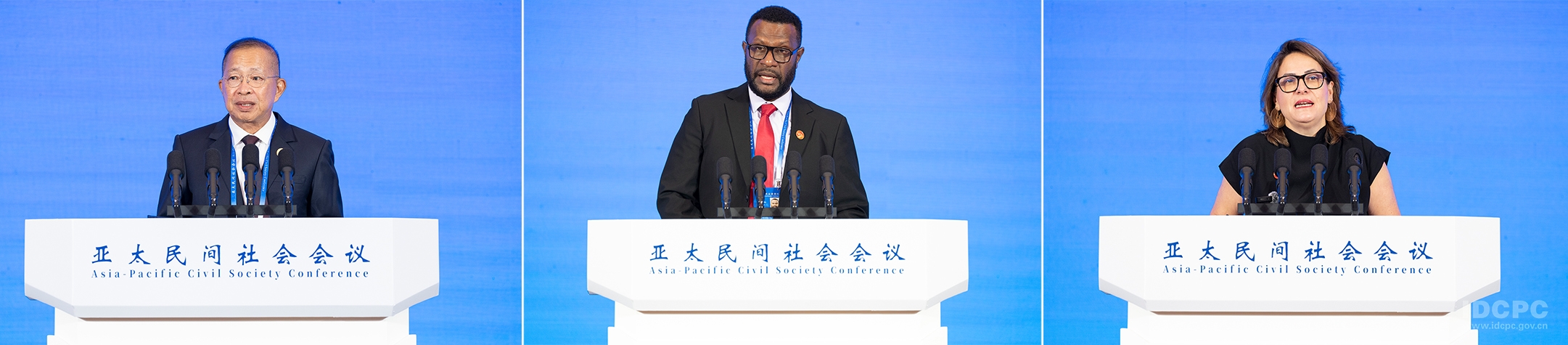
Foreign guests attending the conference expressed their condolences over the casualties caused by a mudslide in Gyirong County, Xizang Autonomous Region. The foreign guests said the Asia-Pacific is a global hub of economic innovation and growth as well as the common home on which the people of the region depend for their livelihoods. Although Asia-Pacific countries differ in history, culture and levels of development, they share common aspirations and expectations for a stable, prosperous and inclusive regional environment. China has played an important role in leading and advancing the building of an Asia-Pacific community. President Xi Jinping’s vision of an Asia-Pacific community has helped build solidarity and pool strength for regional development. At a time when opportunities and challenges coexist, all sides should remain committed to the original aspiration for cooperation, strengthen solidarity and coordination, and pursue closer and more effective regional cooperation to deliver greater tangible benefits to the people of the Asia-Pacific. Civil society is an important part of this process. They expressed readiness to continue supporting and participating in people-to-people exchanges in the Asia-Pacific, contribute to more cooperation outcomes during APEC China Year, strengthen public support for and inject vitality from civil society into building an Asia-Pacific community.
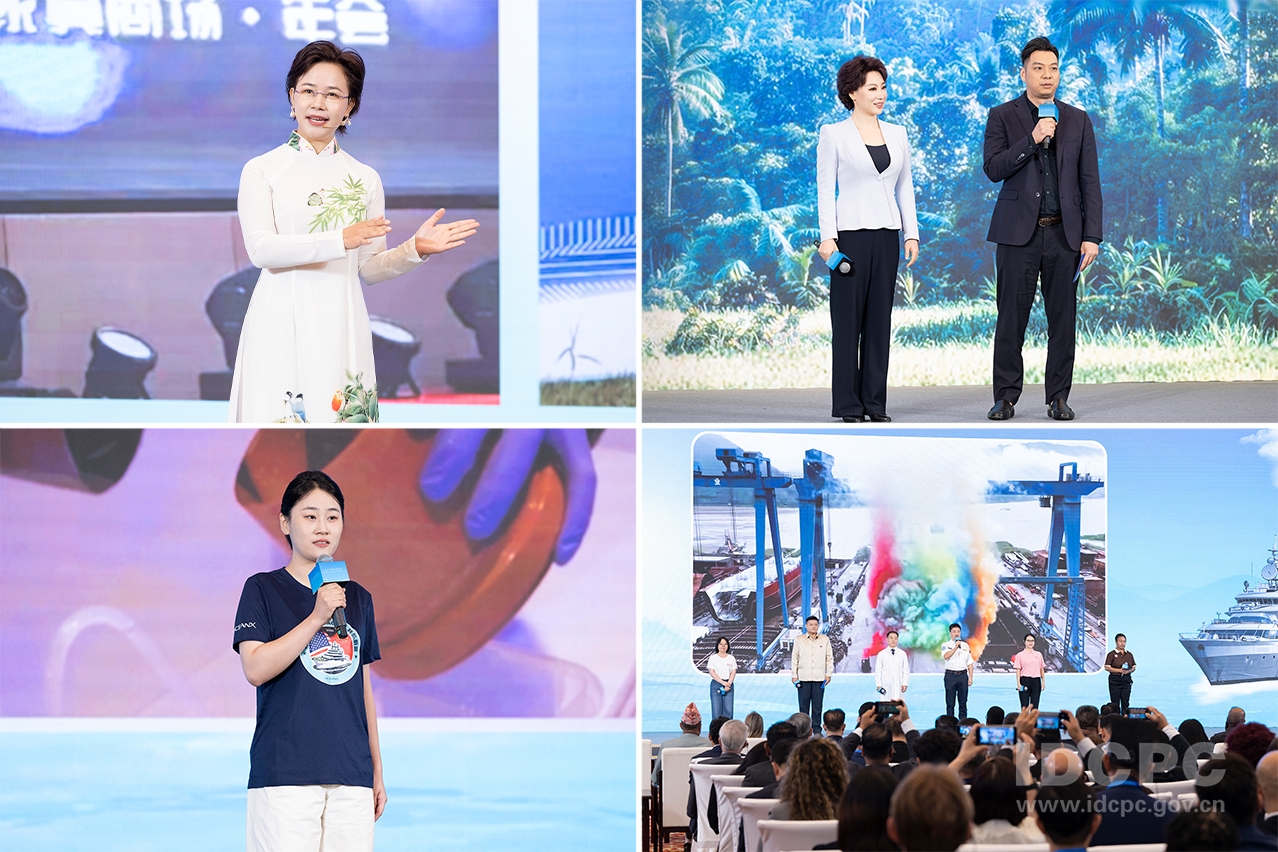
During a session featuring civil-society practices, representatives from Cambodia, Malaysia, Vietnam, Papua New Guinea and the United States shared vivid stories of their respective connections with China and their participation in people-to-people exchanges and cooperation between China and other countries under the theme “Openness · Innovation · Cooperation.” The Asia-Pacific Civil Society Partnership Action Plan was also released at the opening ceremony.

Zhou Naixiang, Deputy Secretary of the CPC Shandong Provincial Committee and Governor of Shandong Province; Ge Huijun, Chairwoman of the Shandong Provincial Committee of the Chinese People’s Political Consultative Conference; Shan Yi, Member of the Standing Committee and Secretary-General of the CPC Shandong Provincial Committee; Xu Hairong, Vice Chairman and Secretary of the Leading Party Members’ Group of the Standing Committee of the Shandong Provincial People’s Congress; and Sun Ximin, Vice Governor of Shandong Province, attended the conference. Lu Kang, Vice-minister of the IDCPC, presided over the opening ceremony.


Follow us:







Copyright © 2003 International Department of Central Committee of CPC. All rights reserved.
Email:info@idcpc.org.cn